







How cleanroom ceiling tiles Certification Shapes Precision Instruments and Optics Cleanroom Design Decisions
Navigate Precision Instruments and Optics cleanroom compliance with confidence. This guide covers cleanroom wall cladding, cleanroom ceiling tiles, and regulatory requirements every project manager must understand.
Regulatory compliance in the precision instrument calibration and optical component manufacturing sector is not optional, it is the foundation upon which operating licenses and market access depend. Facilities must meet tightly controlled temperature, humidity, and particulate environments while demonstrating documented evidence of every design decision, construction milestone, and validation protocol. For project managers, this means selecting partners who understand that compliance is not a checkbox exercise but an integrated approach to facility design and operation. The cost of non-compliance, from product recalls to facility shutdowns, dwarfs any investment in proper cleanroom ceiling tiles systems and validated construction processes.
Navigating Regulatory Requirements for Precision Instruments and Optics Cleanrooms
The design phase offers the greatest opportunity to embed compliance into the facility fabric. Choosing cleanroom wall cladding with documented fire ratings, particle emission test results, and chemical resistance certifications creates a strong compliance foundation. Every penetration, every joint, and every transition must be designed to meet the applicable standard, whether that is ISO 14644, EU GMP Grade A/B, or FDA 21 CFR Part 211. clean room glass panel selection becomes critical here: materials must maintain their classification under operational conditions including chemical exposure, temperature cycling, and regular decontamination. Working with experienced clean room window design suppliers who provide full material traceability documentation significantly streamlines the qualification process.
Building Compliance Into Your Cleanroom Design From Day One
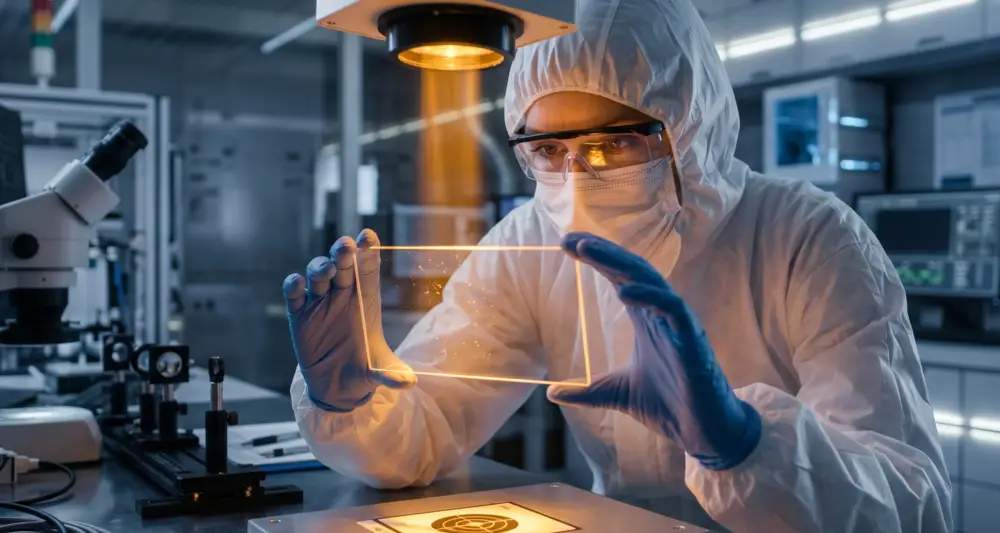
Once operational, maintaining compliance requires disciplined procedures and regular requalification. tightly controlled temperature, humidity, and particulate environments demand ongoing monitoring of particle counts, pressure differentials, temperature, and humidity. Automated building management systems integrated with clean room wall material provide real-time alerts when conditions approach limit values, enabling proactive intervention before excursion events occur. Documented preventive maintenance schedules, staff requalification programs, and change control procedures form the operational backbone of sustained compliance. Facilities that treat compliance as a continuous improvement driver rather than a regulatory burden consistently outperform their peers in both audit outcomes and product quality metrics.
Maintaining Continuous Compliance Through Operational Excellence
Looking ahead, advanced photonics and quantum computing components pushing cleanliness boundaries. Facilities that invest wisely in cleanroom ceiling tiles today will be best positioned to capture emerging opportunities while maintaining the operational excellence that defines industry leadership. Partnering with experienced clean room glass panel ensures your facility remains adaptable, compliant, and cost-effective throughout its service life.